Mabel Rosario Stivaletta
por César Magrini
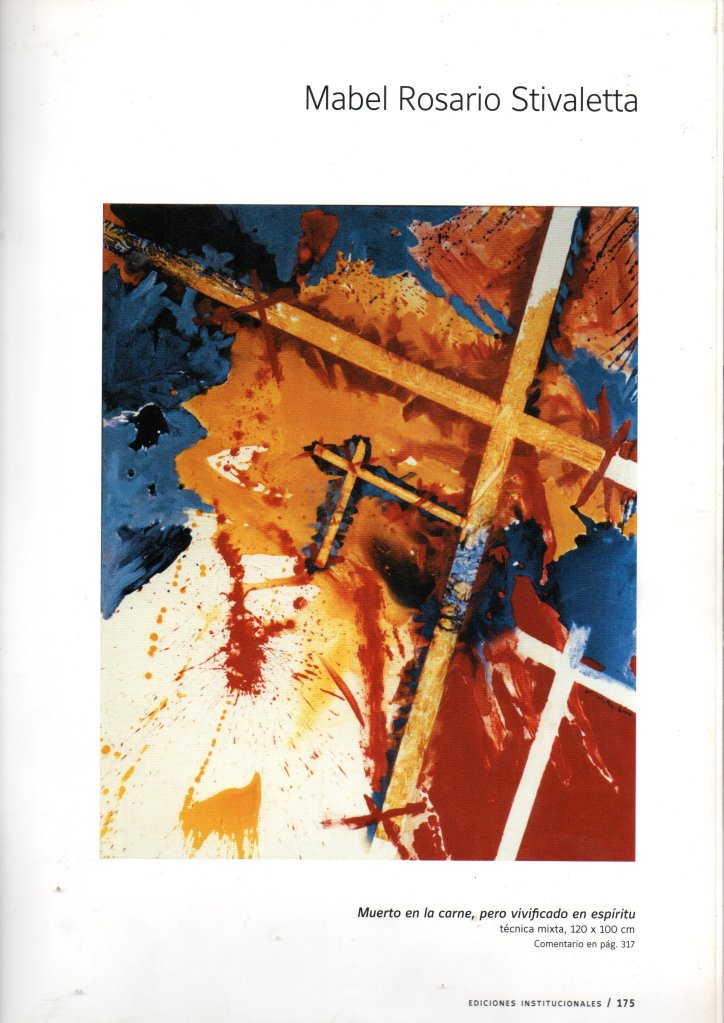
Que los imprevistos vaivenes del alma pueden ser fecundas y recompensantes fuentes de inspiración, lo han afirmado ya muchos nombres indelebles en el curso de la Historia del Arte. A esa respetable escuela pertenece, por su relevante estilo, la presente artista, privilegiada porque ha conseguido expresar todo un mundo de sensaciones y de experiencias anímicas en una sola pintura. Debido al título que la creadora ha dado a su ponderable trabajo, se respira un cristianismo tan profundo como conmovedor, sin que el hecho de pertenecer a la abstracción le haga perder nada de su tan emotivo sentido. Y esto no se debe —sería injusto predecirlo— a que el cuadro haya sido visualmente construido mediante inequívocas y sinceras alusiones al ya multicentenario misterio de la cruz, sino a la manera en la cual la pintora ha dispuesto esos sacramentales símbolos, que han marcado el devenir de la humanidad, tanto en lo material como en lo espiritual. La cruz mayor es la que rige los destinos de sus muy fidelísimos creyentes; entablan un sensible concierto del cotidiano amor a Dios. Llevadas al terreno artístico con fe y con respeto por esta artista, se convierten en lo que real y esencialmente son: símbolos cuya llamativa belleza inunda de alegría y de fundamental esperanza a todos aquellos que se detengan no solo a contemplarlos, sino también a comprenderlos.
English version
All along Art History, many distinguished personages have acknowledged that all ups and downs of life may become fruitful and rewarding inspiration sources. Mabel Stivaletta belongs to that highly regarded school, since thanks to her relevant style she has been able to translate many feelings and experiences into one striking image. “Put to Death in the Flesh, but Made Alive in the Spirit” refers to a Christian faith as meaningful as moving, utterly significant despite the definitely abstract style. In this sense it is worth mentioning that the image is not interesting for the reason that it has been created resorting to unequivocal and sincere references to the timeless mystery of the Cross, but because of the arrangement of the sacramental symbols that have guided human material and spiritual paths for many centuries. The Holy Cross is the one that accompanies the believers in their love for God. Depicted with belief and respect by Mabel Stivaletta, those representations turn into treasures that bring about joy and hope to those who look at and attempt to understand them.